
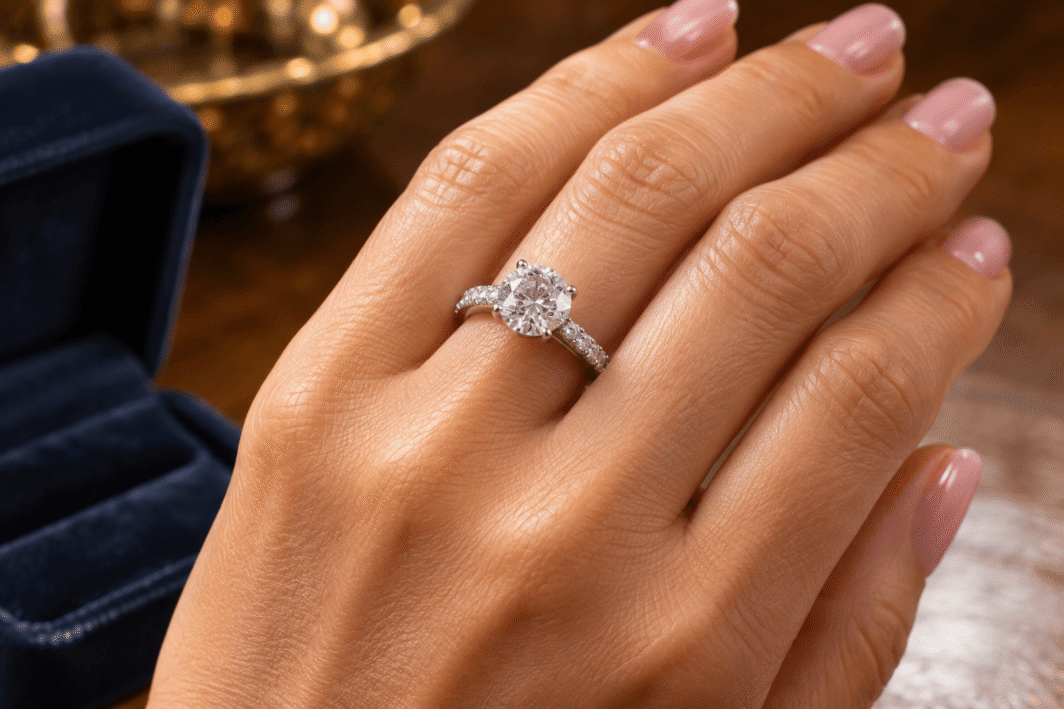
It might be an engagement ring from a marriage that ended, a cocktail ring from an aunt, or a pair of studs nobody wears. At some point the question comes up: what would I actually get for it?
The honest answer surprises a lot of people. A diamond is almost never worth what was paid for it at a jewelry store, and some diamonds are worth very little at all. Here is how to figure out where yours falls.
Step 1: Find out if the diamond is natural or lab-grown
This is the single biggest factor in what a diamond is worth today. Lab-grown diamonds are real diamonds, but they are made in a factory, and their prices have been falling for years. One industry price list found wholesale prices for loose lab-grown diamonds fell another 14% in early 2026 alone. Because new ones keep getting cheaper, there is very little demand for used ones.
To check which kind you have:
- Look for the paperwork. A grading report from GIA, IGI or a similar lab states clearly whether the stone is natural or laboratory-grown.
- Check the receipt. The receipt or an appraisal will often say “lab-grown” or “lab-created.”
- Look at the stone’s edge. Many lab-grown diamonds carry a tiny laser inscription on the thin outer edge, often with “LG” or a report number. You’ll need a jeweler’s loupe to see it.
If you have no paperwork, don’t worry. A professional evaluation can tell you.
Step 2: Understand why resale is lower than retail
When you bought the ring, the price included the store’s markup: rent, staff, advertising and profit. When you sell, a buyer pays based on what the diamond is worth on the wholesale market, not what a store charged for it.
That is why industry guides commonly put the resale value of a natural diamond at roughly 20% to 60% of its original retail price. Larger, well-cut stones with a respected grading report sit at the higher end. Small stones and lab-grown diamonds sit at the lower end.
| What affects the offer | Why it matters |
|---|---|
| Natural or lab-grown | Natural diamonds hold far more value |
| Carat weight | Larger stones are rarer and keep a higher share of their value |
| Cut | A well-cut stone sparkles more and is easier to resell |
| Color and clarity | Whiter, cleaner stones are worth more per carat |
| Grading report | A GIA or similar report gives a buyer confidence in the grade |
| Chips or damage | Visible chips can lower the value noticeably |
Step 3: Don’t forget the gold
The setting is usually 14K or 18K gold, or sometimes platinum, and it has value of its own. Look inside the band for a stamp such as 14K, 585, 18K or 750. A heavier setting can be worth a few hundred dollars on its own at today’s gold prices, even if the diamond is small or lab-grown. Our Class Rings guide walks through how gold value is calculated from weight and karat.
Step 4: Gather what you have
None of this is required, but it can help:
- The grading report or certificate
- The original receipt or appraisal
- Any matching pieces, like the wedding band or earrings from the same set
An insurance appraisal is not the same as a resale value. Appraisals are written for replacement at retail prices, so they are often much higher than any buyer will pay.
Selling a diamond in Fort Worth
At Alliance Gold and Silver Exchange, we evaluate the diamond and the gold setting separately and explain what each is worth. If the stone turns out to be lab-grown, we’ll tell you, along with what the gold is worth. There’s no appointment needed and never an obligation to sell.
Bring a valid photo ID, which Texas law requires for precious metal purchases. We’re at 2901 Western Center Blvd #120, just off I-35W, open Monday to Friday 10 a.m. to 6 p.m. and Saturday 10 a.m. to 2 p.m. Call 682-316-4221 or see how it works.