
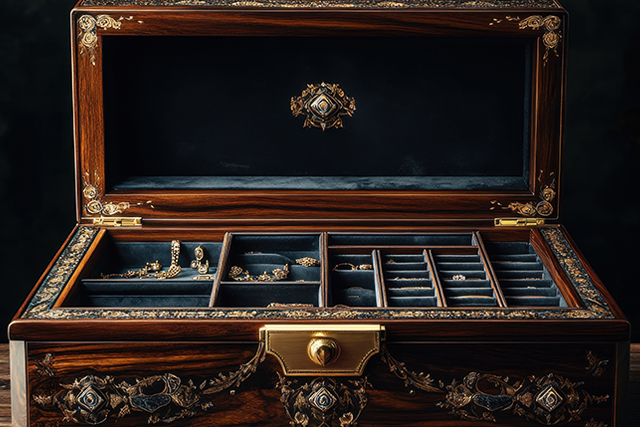
You inherited a family member’s jewelry box, a coin collection, or a few gold bars tucked in a safe, and now you’re not sure what to do with it. You’re not alone — inherited gold and silver is one of the most common ways people end up owning precious metals they never bought themselves. Here’s what to know before you decide whether to keep it, sell it, or have it appraised.
First, Don’t Rush
There’s no deadline for deciding what to do with inherited gold or silver. Unlike some estate assets, precious metals don’t lose value sitting in a drawer (though jewelry can tarnish or get damaged, so reasonable storage matters). Take time to sort through what you have before making any decisions, especially if the items carry sentimental weight.
Sort What You Have Into Categories
Inherited collections are often a mix of several different things, and each is evaluated differently:
- Fine jewelry — rings, necklaces, bracelets, often marked with a karat stamp (10K, 14K, 18K, etc.)
- Loose or boxed coins — may include U.S. mint coins, foreign coins, or older “junk silver” coins from before 1965
- Bullion — bars or rounds, sometimes with a certificate of authenticity
- Dental gold — crowns or bridges, more common in older estates than people expect
- Costume jewelry — looks similar to fine jewelry but contains no precious metal; a quick test can usually tell the difference
Know Your Tax Basis — This Part Surprises Most People
When you inherit gold or silver, the IRS generally gives you a “step-up in basis,” meaning your cost basis isn’t what the original owner paid — it’s the fair market value of the item on the date they passed away. This matters enormously if you eventually sell. If your grandmother bought a gold coin in 1985 for $300 and it’s worth $2,400 today, you don’t owe tax on that $2,100 gain. Your basis resets to the $2,400 value on her date of death, so you’d only owe tax on any appreciation from that point forward.
This is one of the more overlooked benefits of inheriting precious metals versus other investments, and it’s worth keeping documentation of the item’s value as of the date you inherited it — an appraisal or even a dated photo with a known market price can help establish this later.
Get an Appraisal Before You Decide Anything
Even if you’re confident you want to sell, a professional evaluation tells you what you’re actually working with: purity, weight, and whether any pieces have numismatic (collector) value beyond their metal content. This matters because melt value and collector value aren’t the same number — a coin worth $50 in raw gold content might be worth considerably more to a collector if it’s rare or in excellent condition. A reputable buyer should test items in front of you and explain how they arrived at any offer, with no obligation to sell on the spot.
Your Options Beyond Selling
Selling isn’t the only path. Depending on the items and your situation, you might:
- Keep meaningful pieces and have them cleaned, repaired, or reset into something you’ll actually wear
- Split a collection among siblings or family members based on appraised value
- Hold bullion or coins as part of your own long-term savings
- Sell items with no sentimental value while keeping the pieces that matter
When You’re Ready to Sell
If you do decide to sell some or all of an inherited collection, bring everything in for a single evaluation rather than selling piece by piece over time — it’s more efficient, and a buyer can help you sort which items are worth more as scrap metal versus which might be worth more intact. Bring any paperwork you have (appraisals, certificates, even an estate inventory), since documentation can support your basis if you ever need it for tax purposes.
This article is for general information and does not constitute tax or legal advice. Estate and inheritance tax rules can vary based on your specific situation, the size of the estate, and state law. Consult a tax professional or estate attorney for guidance specific to your circumstances.